
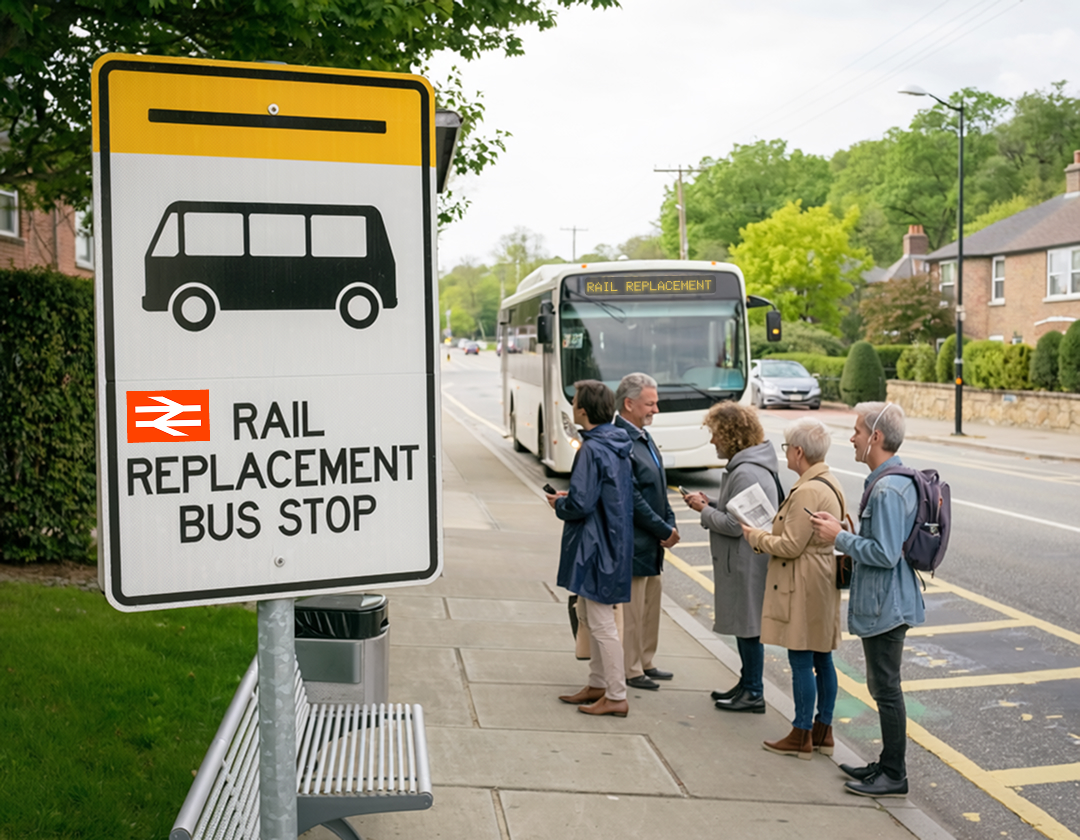
Passenger information has become one of the most important elements of a successful rail replacement operation.
Whether managing planned engineering works, emergency disruption, airport shuttle services or temporary transport hubs, operators need a reliable way to communicate with passengers.
Portable Passenger Information Systems (PIS) are increasingly being adopted as a flexible solution for delivering professional, real-time information wherever it is needed.
This guide outlines the key considerations when evaluating a portable passenger information solution.
Why Portable Passenger Information Matters
Temporary transport operations often face a common challenge.
Passengers arrive at unfamiliar locations and need immediate answers:
Where do I wait?
Which service should I board?
When is the next departure?
Has anything changed?
Without clear information, confusion increases, customer satisfaction decreases and operational staff become overwhelmed with questions.
Portable PIS solutions help bridge that gap by providing consistent, visible information at temporary locations.
Key Features To Look For
Rapid Deployment
Rail replacement operations can be planned months in advance or deployed at very short notice.
A portable solution should be capable of being:
Delivered quickly
Installed without specialist infrastructure
Operational within minutes or hours
The less setup required, the more flexible the solution becomes.
Battery Operation
Many temporary locations do not have convenient access to mains power.
Battery-powered systems provide greater flexibility and reduce installation constraints.
Look for systems capable of operating for a full service day without requiring recharge or intervention.
Real-Time Content Updates
The ability to update information remotely is essential.
A modern solution should support:
Timetable updates
Service alerts
Route changes
Live departure information
Emergency messaging
This ensures passengers receive accurate information throughout the operation.
Accessibility
Accessibility should be a core requirement rather than an afterthought.
Consider:
Screen visibility
Font sizes
Colour contrast
Clear messaging
Multi-format information delivery
Accessible information benefits all passengers, not just those with specific accessibility needs.
Built for Transport Environments
Rail replacement and temporary transport operations demand technology that can operate reliably in challenging vehicle environments.
Equipment should provide:
Automotive-grade reliability
Resistance to vibration and shock
Secure, tamper-resistant installation
Stable operation across varying temperatures
Protection against dust and ingress
Long service life under continuous daily use
This ensures passenger information, communications, and operational systems remain available throughout the duration of the transport operation.
Questions To Ask Suppliers
When evaluating portable passenger information systems, consider asking:
How quickly can the system be deployed?
Can content be updated remotely?
What happens if connectivity is lost?
How is the system powered?
Is the solution suitable for rail replacement operations?
What reporting and monitoring tools are available?
Has the solution been used successfully in live operations?
Beyond Rail Replacement
While rail replacement is a common use case, portable passenger information systems can also support:
Airport shuttle operations
Park and ride services
Event transport
Workforce transport
University campuses
Temporary transport hubs
The flexibility of modern solutions allows operators to maximise utilisation across multiple applications.
The Future Of Passenger Information
Passenger expectations continue to rise.
Clear, real-time and accessible information is becoming an essential component of transport operations rather than an optional extra.
Portable passenger information systems provide operators with a practical way to meet these expectations while improving operational efficiency and passenger confidence.
For organisations responsible for temporary transport operations, the right passenger information solution can make the difference between a stressful customer experience and a seamless one.
