
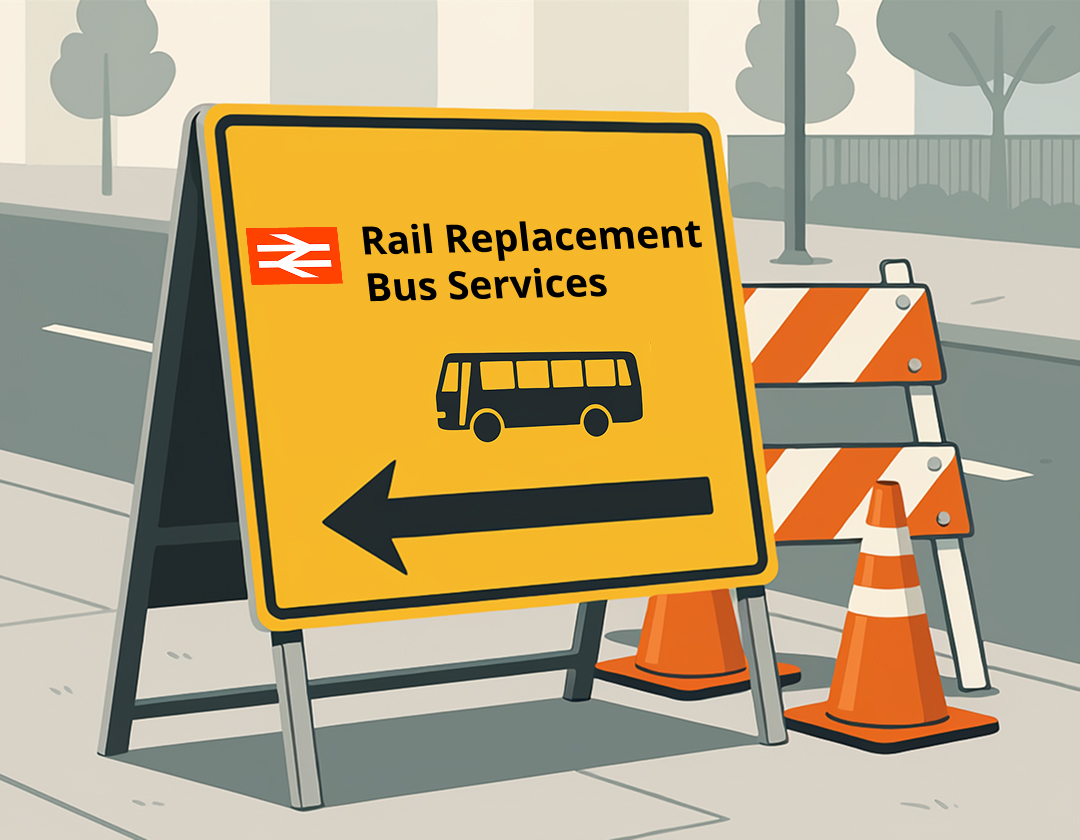
When rail services are disrupted, passengers are often willing to accept that replacement transport is necessary. What they are far less willing to accept is uncertainty.
Over the last few years, expectations around passenger information during rail replacement operations have increased significantly. The Department for Transport (DfT), Train Operating Companies (TOCs), local authorities and passengers themselves all expect operators to provide accurate, timely and accessible information throughout the customer journey.
For transport operators delivering rail replacement services, passenger information is no longer simply a “nice to have”. It has become a critical part of operational delivery.
The Passenger Experience Starts Before the Bus Arrives
One of the most common causes of passenger frustration during rail replacement operations is not the transport itself but confusion around where to go and what to expect.
Passengers need clear answers to questions such as:
Where is my replacement bus departing from?
Has the pickup location changed?
Is my service running on time?
Which bus should I board?
Is this the correct service for my destination?
Without clear information, passengers can easily miss services, board the wrong vehicle, or become anxious about their journey.
Providing accurate information before passengers reach the pickup point is now a fundamental expectation.
Accessibility Must Be Considered From The Start
The Public Service Vehicles Accessibility Regulations (PSVAR) have placed increased focus on accessibility within rail replacement operations.
However, accessibility extends beyond vehicle compliance.
Passengers with disabilities, visual impairments, hearing impairments or reduced mobility require clear, accessible information at every stage of their journey.
This includes:
Easy-to-read signage
Clear wayfinding
Accessible digital information
Consistent messaging across channels
Real-time updates when circumstances change
Operators who consider accessibility as part of the information strategy rather than simply a vehicle requirement are far better positioned to deliver a positive passenger experience.
Real-Time Information Is Becoming The New Standard
Passengers have become accustomed to real-time information in almost every aspect of daily life.
Whether ordering a taxi, tracking a parcel or checking public transport, customers expect visibility.
Rail replacement operations are no exception.
Modern passenger information systems can provide:
Live vehicle tracking
Estimated arrival times
Service disruption alerts
Route information
QR-code access to journey information
Providing real-time visibility helps reduce uncertainty while also reducing pressure on customer service teams and station staff.
Temporary Locations Still Require Professional Information
Rail replacement operations often involve temporary pickup points, changing road layouts and short-notice deployments.
Historically, this has sometimes resulted in basic printed notices or temporary signage.
However, passengers increasingly expect the same quality of information they would receive at a permanent transport interchange.
Portable passenger information systems now allow operators to deploy professional digital information displays within hours, helping ensure consistency regardless of location.
Information Is Part Of Operational Performance
Passenger information should not be viewed as a separate activity from transport delivery.
In reality, information quality directly impacts operational performance.
Effective passenger information can:
Reduce missed services
Minimise passenger complaints
Improve customer confidence
Support accessibility objectives
Improve relationships with TOCs and stakeholders
For operators competing for rail replacement contracts, demonstrating a robust passenger information strategy can increasingly become a differentiator.
Looking Ahead
As rail replacement operations continue to evolve, passenger information will play an increasingly important role in service delivery.
Passengers expect clarity, visibility and confidence throughout their journey. Operators who invest in modern passenger information solutions will be best placed to meet those expectations while delivering a more efficient and accessible operation.
The question is no longer whether passenger information matters.
The question is whether your current approach meets the expectations of today’s passengers, TOCs and regulators.
